
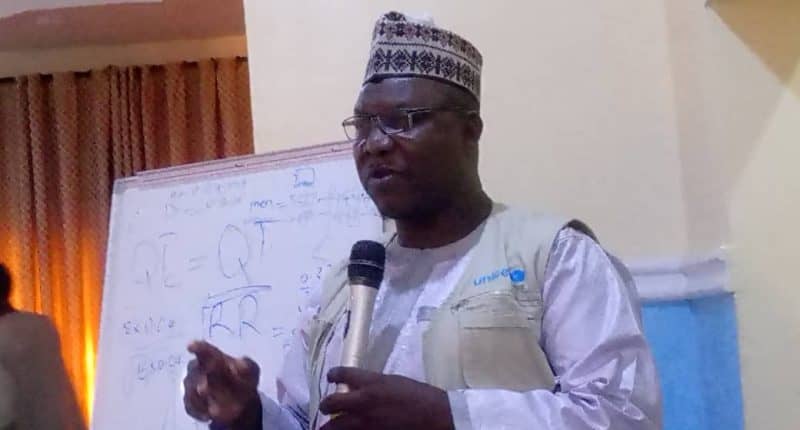

The United Nations Children’s Fund (UNICEF) has trained Civil Society Organisations (CSOs) and Journalists from Sokoto, Kebbi and Zamfara stat
The United Nations Children’s Fund (UNICEF) has trained Civil Society Organisations (CSOs) and Journalists from Sokoto, Kebbi and Zamfara states on childrens’ budget tracking and monitoring.
The workshop held in Birnin Kebbi, the capital of Kebbi State, is aimed at strengthening public accountability and ensuring effective utilisation of government investments in children.
The workshop also aims to ensure that the allocations and utilisation of funds for children from governments of the three states for public accountability.
Speaking while closing the workshop, the UNICEF Social Policy Specialist, Sokoto Field Office, Mr Isah Ibrahim said the two-day capacity-building workshop organised for to enhance the capacity of media practitioners and the CSOs on child-centered budget.
Ibrahim explained that, the workshop was designed to strengthen participants’ capacity to understand government budgets, analyse budget performance reports and generate evidence to promote accountability in the implementation of projects and programmes affecting children.
“Media and CSOs are critical stakeholders and watchdogs that play a vital role in raising the children’s voice.
“The media also served as a channel through which government receives feedback on the needs and expectations of citizens, making its role essential in promoting responsive governance,” he noted.
Ibrahim further said that the training focused on equipping the participants with practical skills to examine budget allocations, implementation reports and government spending across critical sectors affecting children’s survival, development and well-being.
He identified child survival, early childhood development, particularly the first 1,000 days of a child’s life, access to quality education, out-of-school children, safe learning environments, water, sanitation and hygiene as priority areas requiring sustained government investment.
According to him:, “adequate school facilities, qualified teachers, water and sanitation services were essential to encouraging children, especially girls, to enrol in school, remain in the education system and complete their basic education”.
“I have the confidence that the training would enable participants to independently examine budget performance reports and assess the extent to which governments were implementing approved projects and prioritising children’s needs.
“The budget monitoring should go beyond analysing figures and allocations contained in official documents to establishing whether the funds released had produced the intended results.
“CSOs and the Media should engage themselves in field visits to schools, health facilities and communities to verify projects and services captured in government budget performance reports,” he explained.
He called on media and CSOs from the three states to maximize their efforts in budget monitoring and ensure that government allocations for children translate into tangible improvements in their lives.
“The journalists have to ensure regular reporting on budget implementation and produce evidence-based stories that would highlight progress, identify gaps and encourage government to address challenges affecting children,” he added.

COMMENTS